
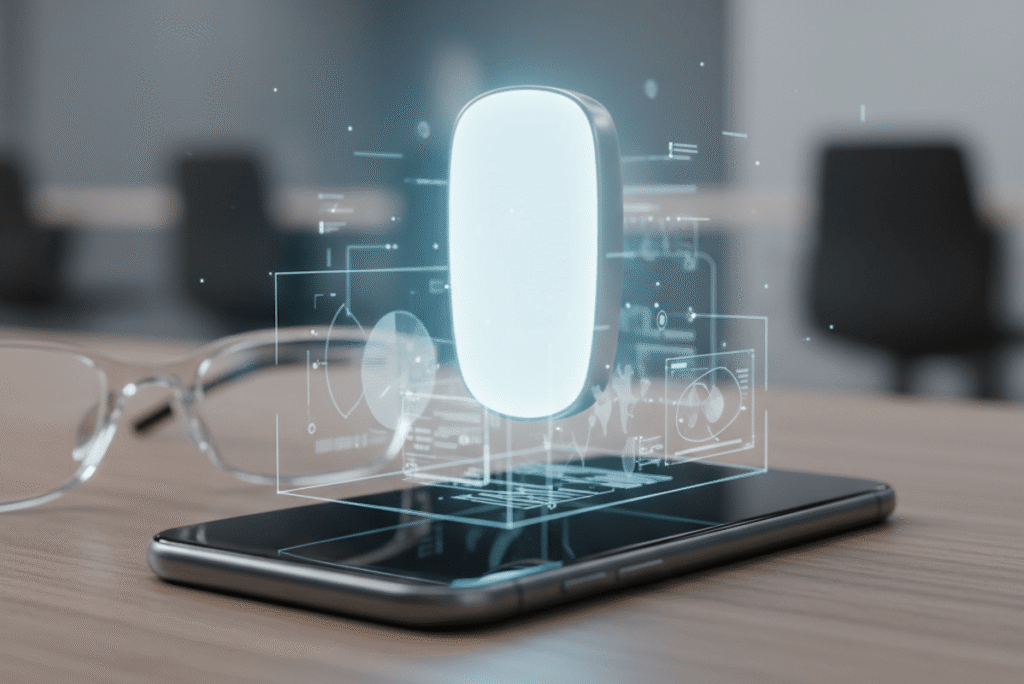
With new wearable AI devices emerging in 2025 – from Meta’s assistant glasses to the Rabbit R1 successors and early prototypes from Apple – computing is quietly shifting from something we hold to something that follows us. Instead of opening an app, we ask a companion. Instead of tapping a screen, we speak instructions. It’s not replacing smartphones yet, but it’s starting to nibble at the edges.
What’s compelling is how personal these devices are trying to be. They learn routines, observe patterns, and respond in ways that feel more human than mechanical. It’s convenient, sure, but it also raises new questions about intimacy with technology. When your device listens all day and offers suggestions before you ask, is that helpful… or intrusive with extra steps?
This transition mirrors the early smartphone era – exciting but blurry, full of promise and uneven execution. We’re not seeing the “next iPhone” yet, but we’re seeing the prequel. The part where the ecosystem forms quietly, one interaction at a time.
If computing eventually becomes companion-based, what will we gain from that shift? And what might we lose when the line between tool and teammate fades?
Related article: Wired