
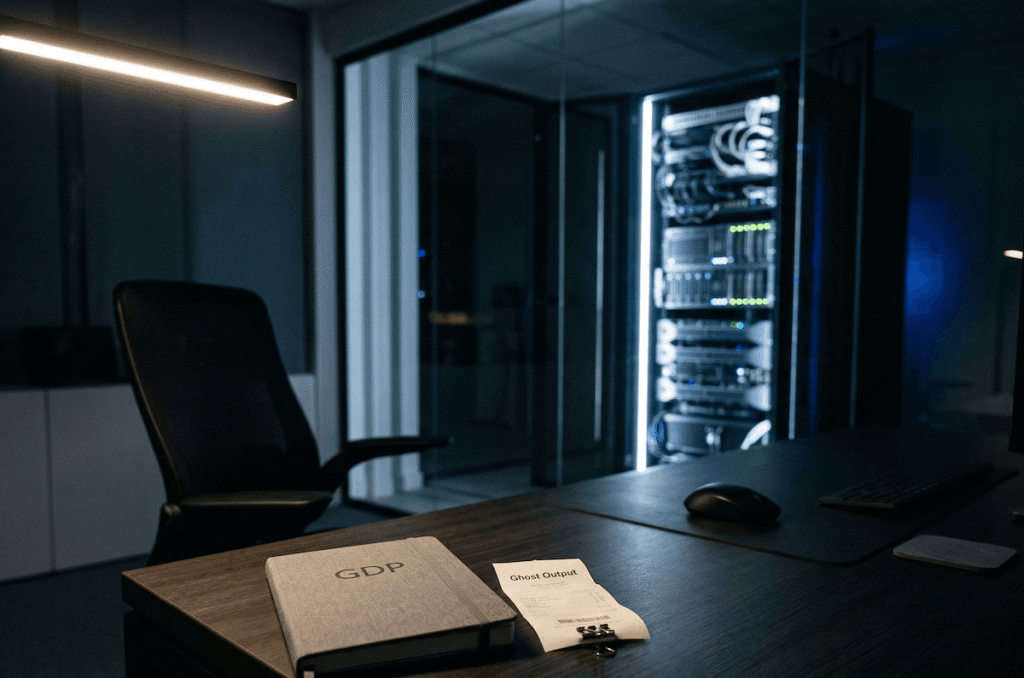
Citrini Research wrote “The 2028 Global Intelligence Crisis” as a fictional macro memo dated June 30, 2028. It’s explicitly a scenario, not a prediction, which is the correct way to read it.
It’s also one of the cleaner explanations I’ve seen for why “AI going great” could still feel bad for the economy.
Where it’s genuinely sharp
The piece correctly names the disruption zone: abundant intelligence hits knowledge work first. Analysts, marketers, developers, designers, legal, consulting. Not someday, but already.
It also lands a macro point that’s easy to wave away until someone puts a label on it. Their “Ghost GDP” idea is basically: output shows up on paper, but money stops moving through the human economy because fewer people are getting paid like they used to.
That’s not doomer talk. That’s a real question about who captures productivity gains.
Where I think it cheats a little
The story depends on speed.
In the memo, the shift from “contained and sector-specific” to “the economy doesn’t resemble the one we grew up in” takes about two years.
Two years is possible in software demos. It is rare in actual institutions.
Adoption has friction: procurement cycles, risk tolerance, regulation, legacy systems, and the simple fact that customers still expect a human to pick up the phone when something breaks.
It also assumes a one-way door: jobs disappear, and new categories of work fail to show up in time. Historically, technology does not behave that neatly. The titles change, the workflows change, and the org chart gets rearranged. But work reappears in the gaps.
What I think the real risk is
The risk is not “everyone is unemployed.”
It’s that the entry ramps get pulled up.
Fewer junior hires. More consolidation. Wage pressure in the middle. One strong operator with good AI workflows replacing a small pod of humans.
That kind of disruption is quieter than a collapse. It’s also harder to notice until you are mentoring someone and realize there is no one left to mentor.
AI does not have to end the economy to change your career. It just has to make intelligence cheaper, and force the rest of the system to reorganize around that new price.