For a while now, I have wanted a better answer to one very basic question:
What actually needs my attention right now?
It is not a profound question. It is barely even a clever one. But it is the question I ask most mornings, usually while toggling between my inbox, calendar, docs, Asana task list, and whatever tab I left open the night before for reasons I no longer understand.
Why the obvious tools were not solving the obvious problem
The problem is not that these tools are bad. Email does email. Calendar does calendar. Asana does tasks. Documents quietly pile up in folders like they are hoping not to be perceived.
Everything works. Sort of. The issue is that none of them answer the actual question. They show me everything they know. They do not tell me what matters.
They show me everything they know. They don‘t tell me what matters.
The two-day experiment
So last weekend I gave myself two days to test a small idea: could I build something that looks across those systems and surfaces only the things that seem important, time-sensitive, or likely to need action from me?
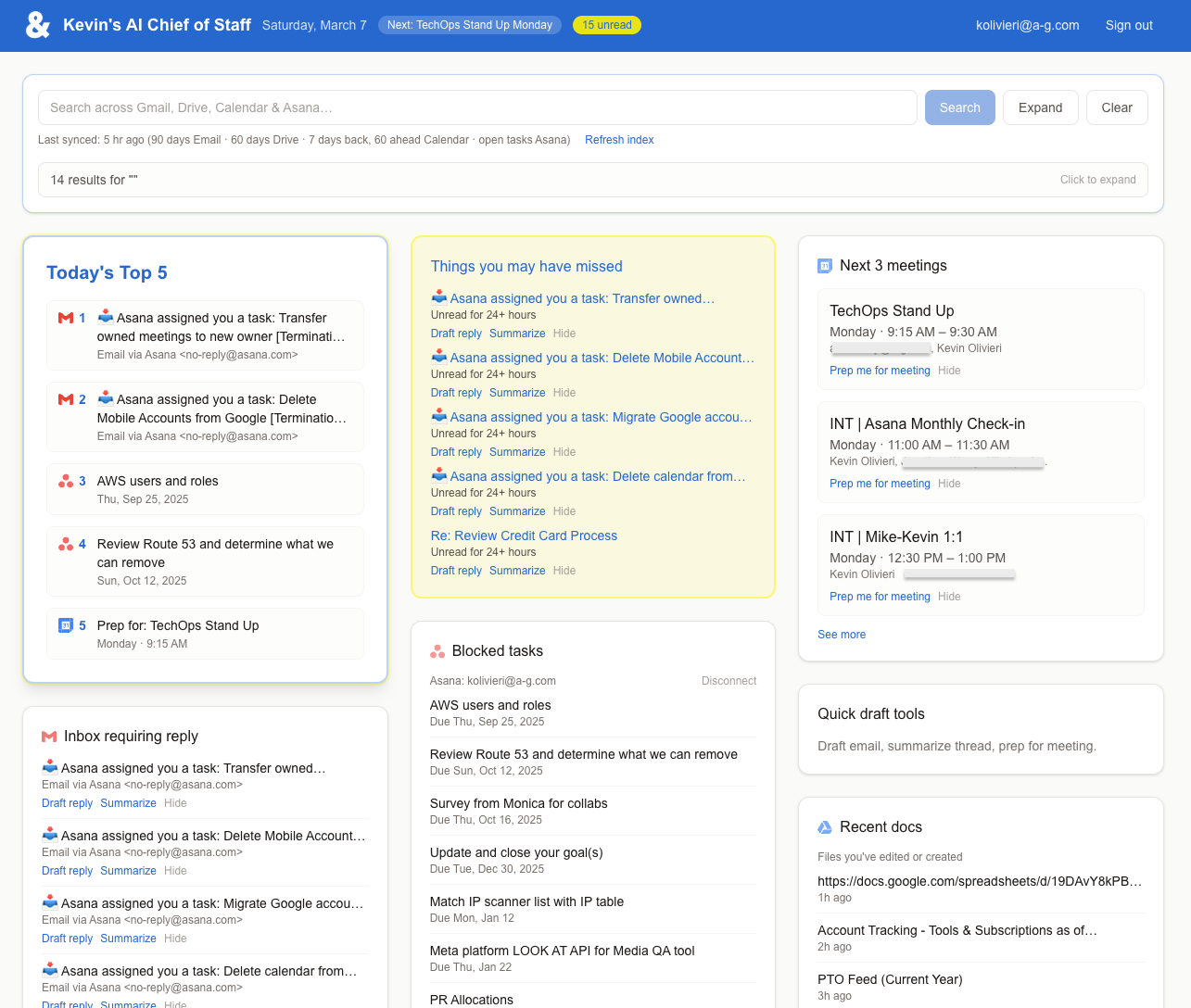
Not a dashboard. I have seen enough dashboards. A dashboard is often what happens when we want clarity and accidentally create an airport control panel.
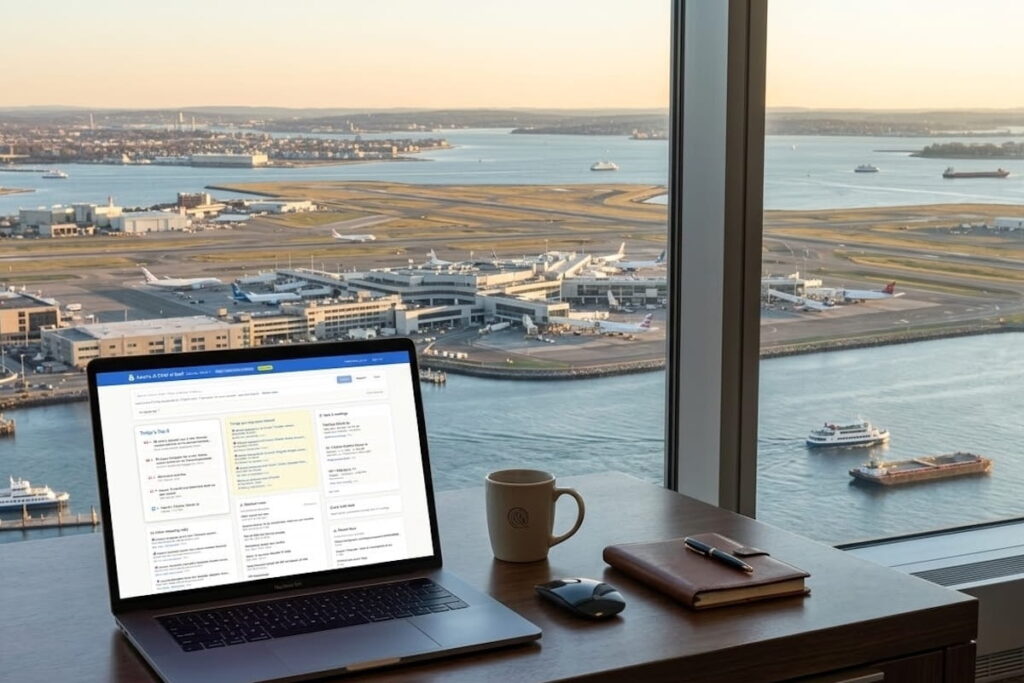
This was closer to a personal Chief of Staff. Something that scans across email, calendar, docs, and tasks, and helps answer a few practical questions: what is urgent, what is coming up, what needs a response, and what I should be prepared for.
What it actually does
I wired together Gmail, Calendar, Drive, and Asana. That meant pulling recent emails, upcoming meetings, relevant files, and open tasks into a shared view. From there, the useful part began: ranking and filtering.
- Inbox items are triaged instead of simply listed
- Meetings get prep briefs with related email threads, files, and tasks
- Search works across email, files, calendar, and tasks
- Unread messages older than a day can be surfaced before they quietly become problems
- Personal calendar noise gets filtered out
A few of those details made it feel more real than expected. It could scan shared drives, track recent work, and even fall back to live search when the index did not have what it needed yet.
What turned out to matter
The most interesting part was not the aggregation itself. Plenty of tools can gather information. What mattered was whether the system could reduce decision fatigue.
That meant not showing me more. Showing me less, but better. A Top 5 view forced prioritization. A meeting prep brief answered the pre-call question of, “Wait, what was this about again?” A cross-tool search layer helped because context is usually scattered right up until the moment you need it most.
The part I keep thinking about
The experiment was scrappy on purpose. I was not trying to build a polished productivity platform in 48 hours. I just wanted to know if this category of tool could be genuinely useful.
I think the answer is yes, with one important caveat: it only works if it respects attention. The world does not need another app yelling for a spot on the home screen. It probably does need more systems that quietly help people sort signal from noise across the tools they already use.
That feels like the more interesting future to me. Not replacing our messy stack of software, but acting like a layer above it that says, calmly and without drama, “Here are the few things you should care about first.” Which, if we are being honest, is a surprisingly rare feature.