If you have been feeling behind on AI lately, I have good news and slightly annoying news. The good news: you are not behind. The slightly annoying news: nobody is, because the thing keeps moving faster than anyone can keep up with, including the people building it.
I tried to write a simple “here is the state of AI” post a few weeks ago. By the time I finished a draft, three of my facts were wrong. A new model had shipped, a billion-dollar deal had closed, and one company had a model temporarily switched off by the U.S. government (more on that, because it is wild). So I gave up on the snapshot and went looking for something more useful: a way to think about all this that does not expire in 48 hours.
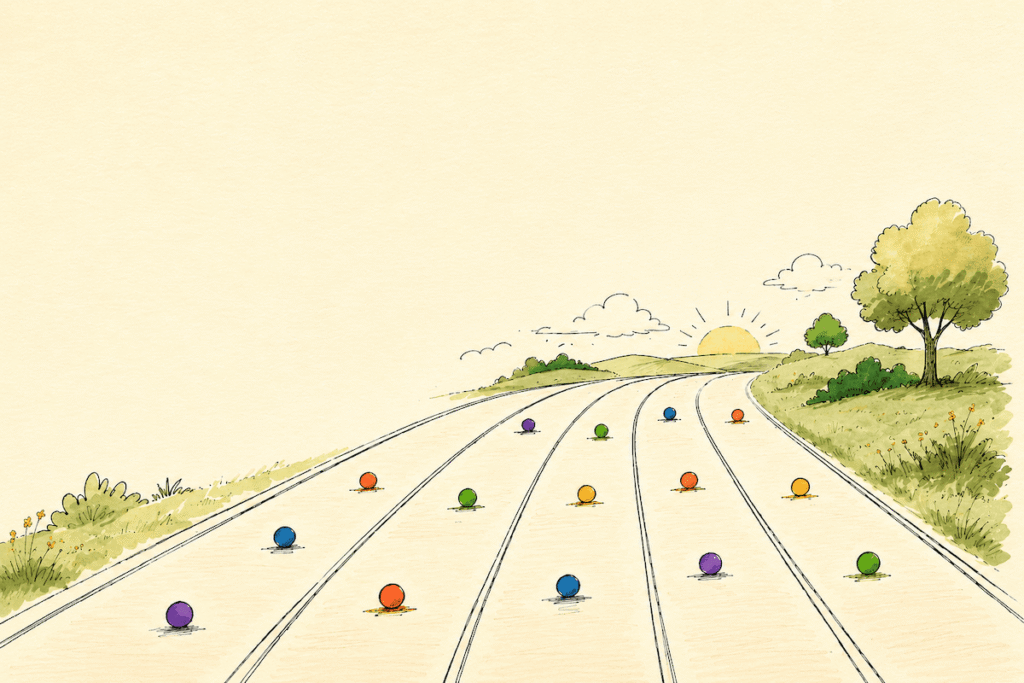
Here is what I landed on. We keep talking about “the AI race” like it is one thing, like a bunch of companies running toward the same finish line. It is not. It is at least five different races happening at once, and most of the confusion comes from watching all five at the same time and trying to keep score on a single scoreboard.
So let’s slow down and walk through them. One race at a time, in plain language, with the actual June 2026 news attached. By the end you will have a mental map that should survive longer than my last draft did.
Race 1: The Model Race (who is the smartest)
This is the one everyone already knows, because it is the one that makes headlines. Who has the best “brain”? Which model reasons best, codes best, handles images and audio and video, and can act on your behalf instead of just chatting?
This race is crowded and genuinely close right now. OpenAI keeps shipping new versions of GPT at a pace that is honestly a little exhausting (a new model roughly every couple of months). Google’s Gemini family has been moving just as fast, with Gemini 3 arriving in late 2025 and a steady stream of 3.x updates since, including new audio and live-translation features. Anthropic’s Claude has been trading the top spot on the public leaderboards. And then there is the part most people miss: a group of Chinese labs (Qwen, DeepSeek, Kimi, MiniMax) has quietly closed most of the gap while charging a fraction of the price, often with “open weights,” meaning anyone can download and run the model themselves.
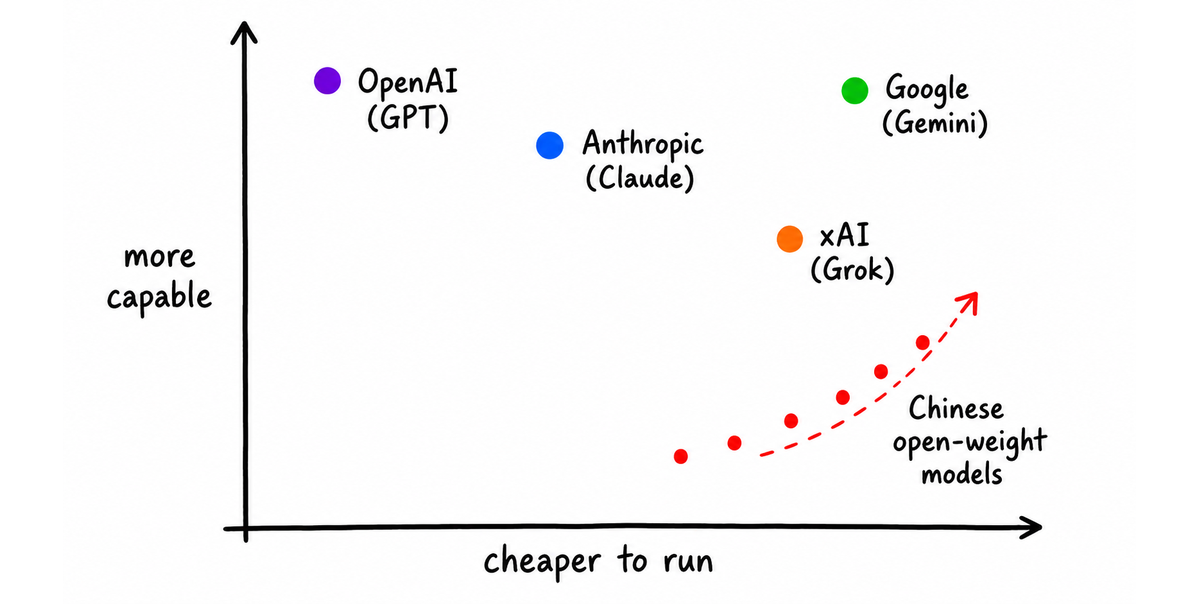
Roughly where the big models sit today. The story isn’t who’s on top, it’s that the cheap open-weight models keep creeping up toward the pack. (A rough map, not a benchmark.)
The plot twist of 2026 is that “smartest” stopped being the only thing that matters. When five models are all roughly excellent, the question shifts from “which is best” to “which is best for this specific job, at this price.” The race did not end. It just got more interesting.
Race 2: The Platform Race (where the work actually happens)
This is the race I think normal people will feel the most, even if they never read a single benchmark.
The question here is not “which model is smartest.” It is “which app becomes the place where you actually get things done.” And the clearest signal of where this is heading came from OpenAI, which has stopped treating ChatGPT like a chatbot and started treating it like an operating system. They introduced apps that run inside ChatGPT, plus a developer kit so companies like Canva, Spotify, Zillow, and Expedia can live right inside the conversation. Instead of opening a different app for every task, the idea is you stay in one window and the apps come to you. OpenAI’s leadership has openly talked about building a single “super app” that folds chat, coding, and browsing into one place.
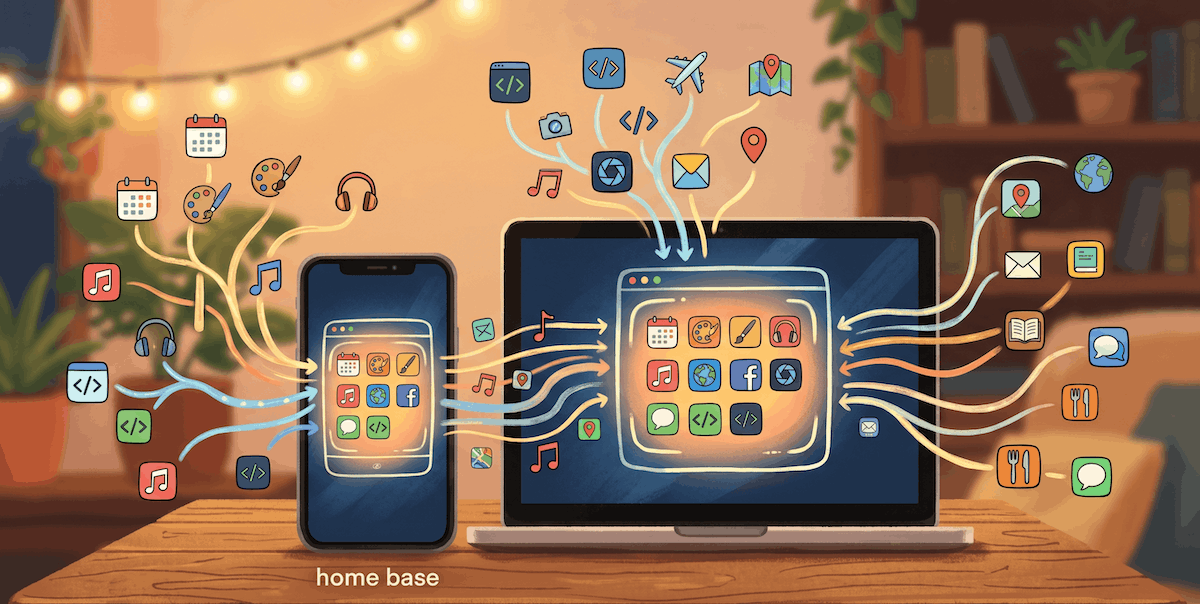
Google is playing the same game from the opposite direction. Rather than build one destination, it is sliding Gemini into the products you already use: Search, Gmail, Docs, Android, the works. Microsoft does this with Copilot. Apple is doing its own version (we will get there). The bet is the same across all of them: the company that becomes your default surface for work gets to keep you, the way your phone’s home screen keeps you.
Race 3: The Infrastructure Race (who owns the picks and shovels)
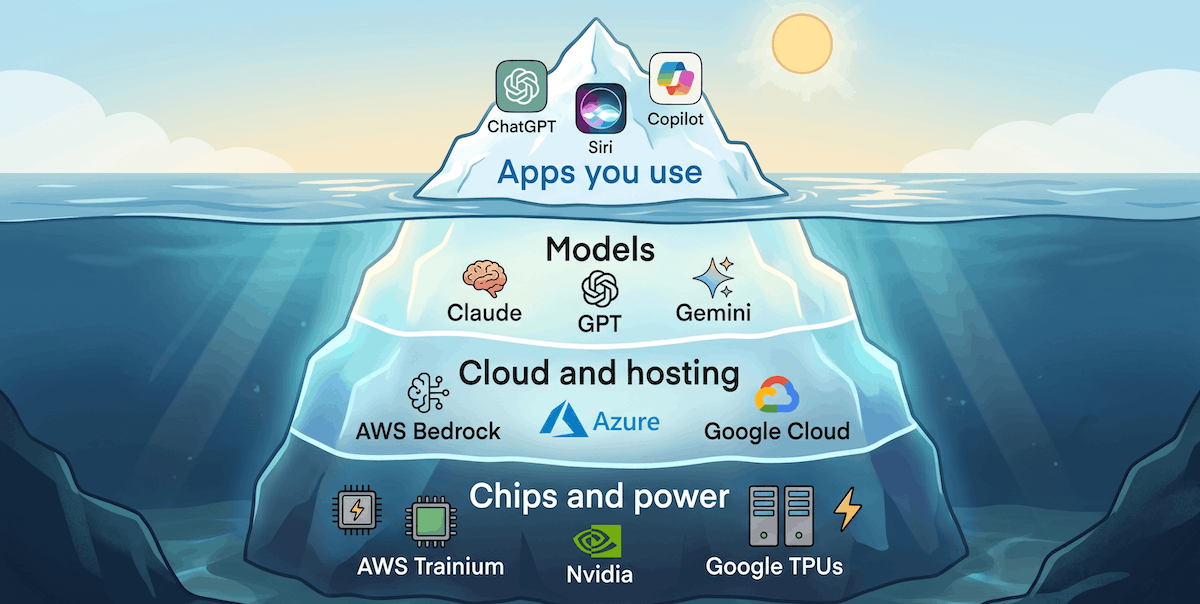
Here is the part that sounds boring and is actually the most important: none of these models run on magic. They run on enormous amounts of specialized computer chips, power, and cooling, housed in buildings the size of small towns. Somebody has to own all of that. That somebody collects rent on the entire industry.
Amazon’s cloud division, AWS, has decided it wants to own as much of that supply chain as possible. Not just hosting other people’s models, but selling its own (a family called Nova), building its own custom chips (Trainium), and offering the tools to build AI agents on top. The headline that makes the scale obvious: Anthropic agreed to spend more than $100 billion on AWS over ten years, locking in up to 5 gigawatts of computing power, while Amazon put more money into Anthropic in return. Anthropic explained the logic of the deal on its own blog: it needs a staggering amount of compute to keep up.
Sit with that number for a second. One hundred billion dollars. That is not a software budget, that is a national infrastructure budget. The companies winning the model race cannot win it without someone else winning the infrastructure race, which is why the cloud giants and chipmakers are suddenly the quiet kingmakers of the whole field.
Race 4: The Trust Race (who can you actually let in)
The smarter these systems get, the more access they want. To be useful, an assistant wants to see your email, your calendar, your photos, your messages, your files. That is also exactly the stuff you might not want a company hoovering up. So a whole separate race has formed around a simple question: who can you trust to handle your life?
Apple has decided this is the race it wants to win. At its developer conference in June, it announced a rebuilt Siri and a new wave of Apple Intelligence, and the entire pitch was built around privacy. The approach: do as much as possible directly on your device, and when a request is too big for the phone, send it to something Apple calls Private Cloud Compute, which it says is built so that even Apple cannot see your data. One Apple executive put it bluntly, saying privacy in AI is non-negotiable. (There is a fun irony here: Apple’s new Siri leans on Google’s Gemini under the hood, which tells you how hard the model race is to win, even for the most valuable company on earth.)
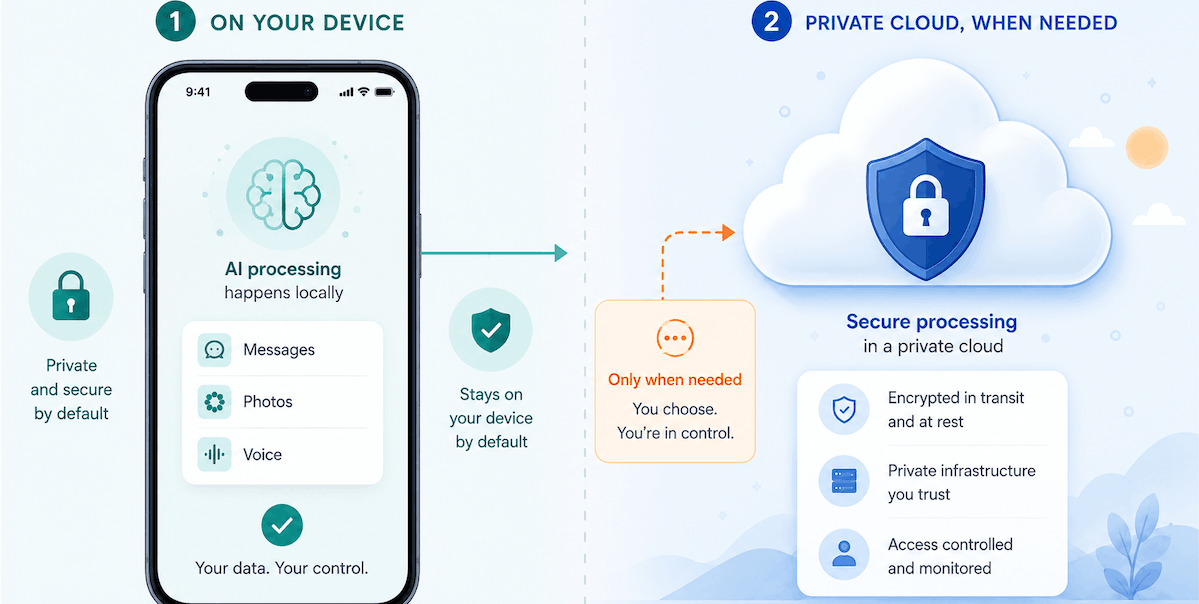
Trust is not only a consumer thing. For businesses, this race is about compliance, security, legal exposure, and being able to prove where your data went. The company that makes “yes, you are allowed to use this at work” the easy answer wins a market that benchmarks alone cannot capture.
Race 5: The Sovereignty Race (who controls access at all)
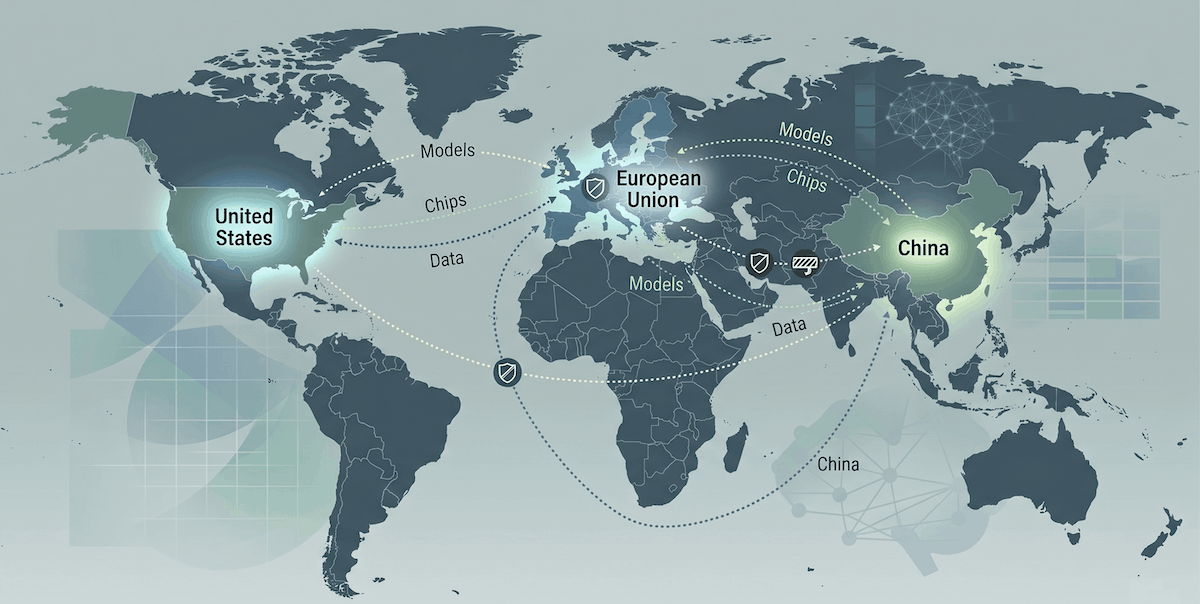
This is the newest race, and the one that took a sharp turn this very month. It is bigger than any single company. It is about who controls access to the most powerful models, the chips that run them, and the data that trains them, all the way up to national governments.
The clearest example landed on Friday. The U.S. government issued an export-control order restricting foreign access to Anthropic’s most powerful models, citing national-security concerns about their ability to find and exploit software vulnerabilities. To comply, Anthropic said it had to switch the models off for everyone, not just foreign users, at least temporarily. Axios reported the order came in a letter from the Commerce Secretary and would require special licenses to share the models outside the country. Anthropic pushed back publicly, arguing the trigger (a narrow jailbreak technique) does not justify pulling a model used by enormous numbers of people. Reuters and other outlets covered the standoff as it unfolded.
Read that again, because it is a genuine first. A commercial AI model got treated like a controlled weapon, the way the government treats advanced military technology and certain chips. This is the same logic behind the export controls that pushed those Chinese labs to engineer cheaper models that route around restricted hardware in the first place. The model race and the sovereignty race are now tangled together, and governments have entered the chat.
So what does this mean for a normal person?
Here is the part I wish someone had told me before I went down this rabbit hole.
You do not have to pick a winner. The five-race framing exists precisely because there will not be one winner. OpenAI might own the platform you work in while running on Amazon’s infrastructure, using a model that competes with Google’s, all under rules set by a government in the sovereignty race. These companies are rivals and partners at the same time, constantly, which is why it feels confusing. It is confusing. It is supposed to be.
What you can do is much smaller and much calmer. Pick one assistant and actually use it for a real task this week. Notice which race you personally care about. If you value privacy, you are a trust-race person, and Apple’s pitch is aimed at you. If you just want the smartest answer, you are a model-race person, and you should try a couple and compare. If you run a business, the infrastructure and trust races are quietly deciding your costs and your risk, whether you are paying attention or not.
The whole field is moving fast, but the shape of it is not actually that complicated once you stop trying to watch all five races on one screen. Smartest brain. Best place to work. Who owns the engine room. Who you can trust. And who controls the keys. That is the map.
It will be slightly out of date by the time you finish reading, of course. That part I cannot fix. But the five lanes should still be there, and now you know where to look.