
Part of the Smart Home Saga – a four five-part look at my ongoing truce with Google Nest.
Once I accepted that my Nest was being left behind, I started researching alternatives. What I discovered was that choosing a smart thermostat isn’t as simple as comparing price tags — it’s an entire decision tree of compatibility, wiring, rebates, and feature trade-offs.
My home was built in the 1950s. It has a boiler with radiators and no central air. That alone ruled out a surprising number of options. But I still wanted something Wi-Fi-enabled — a device that could handle heat scheduling and give me energy insights without needing to gut my system.
Defining My Requirements
I wrote out what really mattered to me:
- Must work with a boiler-based, forced hot water system
- Must not require major rewiring or a C-wire adapter if possible
- Should support remote scheduling and app control
- Should be compatible with Mass Save rebates (Massachusetts-based energy rebates)
- Shouldn’t lock me into one company’s smart-home ecosystem again
That narrowed the list quickly.
The Shortlist
After wading through reviews, Reddit threads, and YouTube explainers, two names kept coming up:
- Ecobee Smart Thermostat Premium – praised for its open integrations and solid customer service.
- Nest Learning Thermostat (Gen 4) – the “new” Nest, with tighter Google Home integration but limited flexibility.
On paper, both looked great. In reality, my house made the decision harder.
Falling for Ecobee
Ecobee seemed to check all the boxes. The interface looked clean, the app intuitive, and it even came with optional room sensors for more accurate temperature readings. It also played nicely with Alexa and Apple HomeKit, which gave me an escape route from Google’s walled garden.
Then came the compatibility test – which I passed… sort of. The system flagged that my setup lacked a C-wire and would need additional hardware (a power extender and a relay) to run properly. I reached out to Ecobee support and got this very helpful link:
👉 Ecobee Compatibility Guide
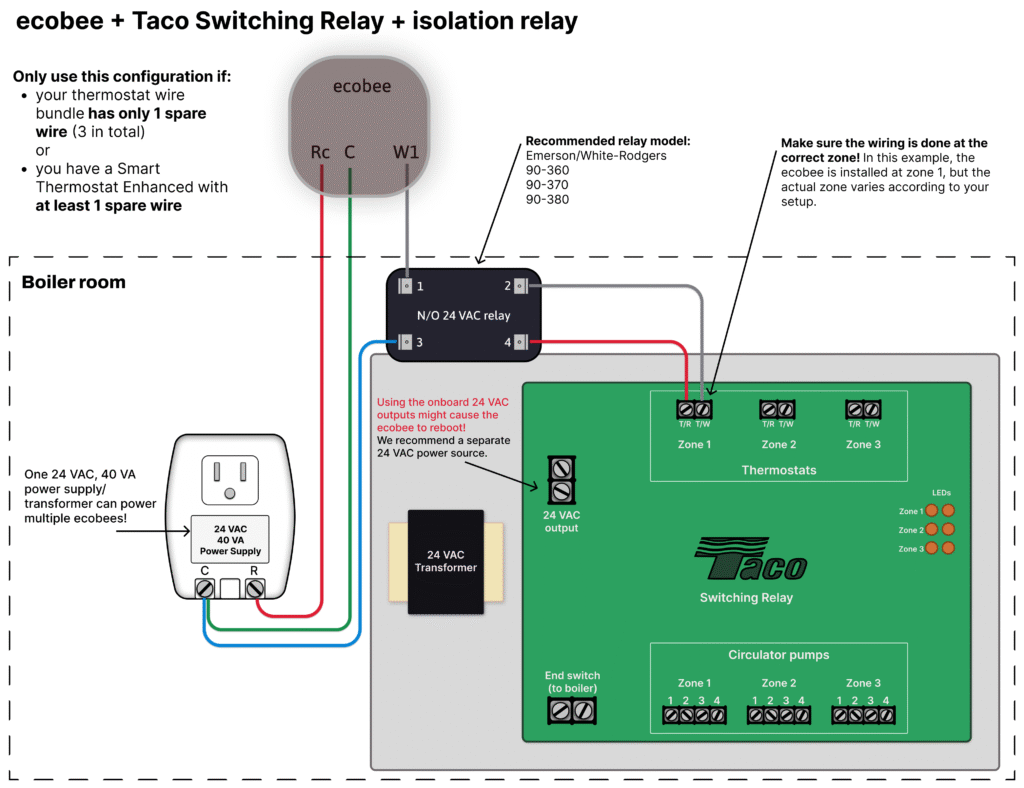
Their support was excellent – quick, detailed, and honest. But the idea of splicing in new wiring or hiring an electrician for what used to be a simple thermostat felt like overkill.
The Dilemma
Here’s where the excitement of smart-home research met the reality of my 1950s heating system.
I’d done the homework, read the reviews, and even started picturing the Ecobee interface glowing confidently on my wall. But once I learned it would require additional hardware – a power extender kit or a relay module – my enthusiasm cooled.
Do I really want to rewire part of my house just to keep my thermostat connected to Wi-Fi? Or should I settle for the setup I already have, even if it’s losing some of its brains?
That question summed up the dilemma perfectly.
Because this wasn’t just a technical choice – it was philosophical. The whole point of smart-home technology is to make life easier, not more complicated. Yet here I was, weighing the cost of an electrician visit, new wiring, and another round of setup instructions against the convenience of adjusting my heat from my phone.
And that’s when it hit me: sometimes “smart” isn’t smart for every home.
Older houses like mine weren’t built for always-connected electronics. They were built for durability, not digital dependency. Every time I tried to “modernize” one system, I found a dozen small, analog obstacles waiting to remind me that progress is rarely plug-and-play.
Even if I did go through with the upgrade, I’d still be betting on the same model that just burned me: cloud-dependent technology. There’s no guarantee Ecobee won’t make the same decision a few years down the road.
So I was left standing in the middle – stuck between what works, what’s modern, and what’s worth it. Do I invest more time and money into another device that might outsmart itself? Or do I embrace simplicity and let the old Nest keep doing what it’s done for years: quietly heat my home, no app required?
It’s not the most high-tech outcome, but sometimes the smarter choice is the one that keeps you warm without a firmware update.
Next in the Series
So where did I land? Let’s just say I’m taking a middle path – one that involves no rewiring, no rebates, and no more emails from Google (for now).
👉 Read previous: When ‘Smart’ Becomes Stupid: My Forced Upgrade Experience with Google Nest
👉 Read next: Settling (For Now): Living with My Half-Smart Nest Setup