Who Tells the Audience?
Here is a question worth sitting with before it becomes urgent: if an audience cannot tell whether the person in your ad is real, who is responsible for telling them? For most of us that has been a someday problem, filed next to other things we will deal with once they actually show up. New York just moved it to the top of the pile and made it a today problem.
As of this week, the state has a law requiring disclosure when an ad features an AI-generated human-like performer. Out loud. In the ad. This is a friendly callout to my ad buddies, not because we have all been doing this, but because the moment any of us starts, the rules are already waiting.
What New York Actually Decided
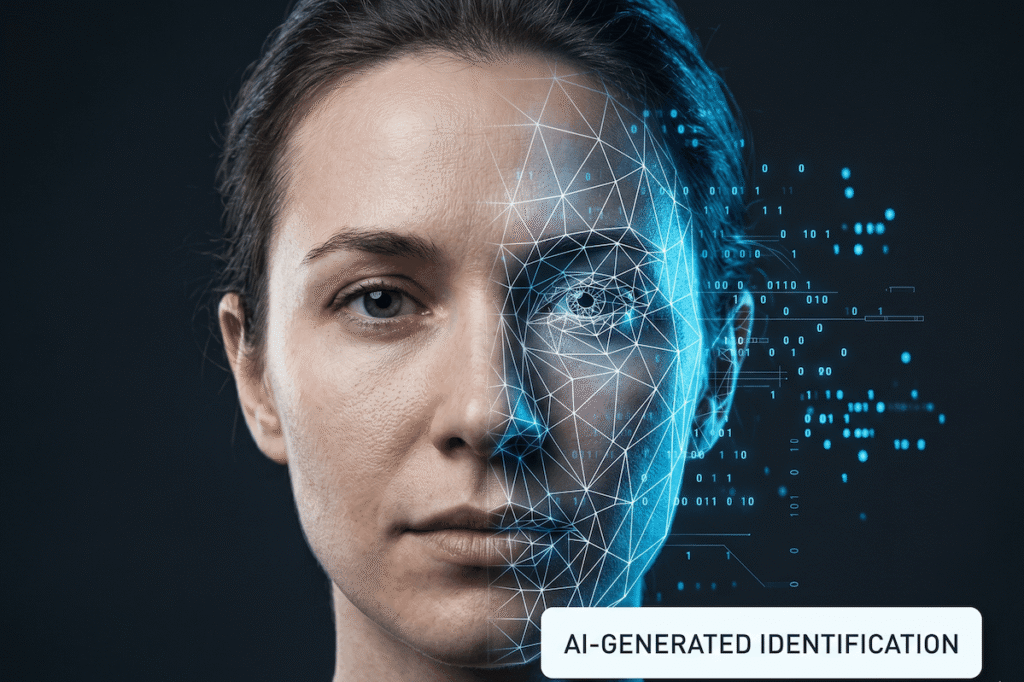
The short version of New York’s synthetic performer law: if a commercial ad uses a synthetic performer, you need a clear and conspicuous disclosure. A synthetic performer is an AI-generated or digitally created person who appears to be performing in the ad but is not a real, identifiable human.
That net is wider than you might hope. AI-generated actors, fake testimonial customers, invented UGC creators, synthetic spokespeople, hosts, experts, employees, influencers, and those eerily friendly human-like avatars all count. The disclosure also has to live inside the ad itself. A tidy AI statement buried in your website footer does not count, which is a shame, because that is precisely where every one of us would have hoped to hide it.
Yes, This Reaches You Too
Here is the part where my fellow ad people stop feeling geographically safe. The law follows the audience, not your office address.
If a campaign runs in New York, targets New York, or is a national buy that simply includes New York, you are in scope. Paid social, programmatic, streaming, display, video, out of home: if it can deliver in New York, assume it will. The honest operating rule is refreshingly dumb. If you cannot reasonably keep New York out of the media plan, plan for the disclosure and move on with your life.
What Counts, and What Gets a Pass
Not every pixel of AI sets this off. (Reminder for anyone already drafting a panicked Slack message: breathe.) AI-generated copy is fine. AI product images with no human in them are fine. Internal mood boards and storyboards, fine. Resizing and versioning that does not create or materially change a human performer, also fine. Audio-only ads are specifically exempt, and using AI only to translate a real performer’s language is too.
What gets you is the synthetic human pretending to be a real one. And the cost of guessing wrong is not theoretical: civil penalties run $1,000 for a first violation and $5,000 for each one after that. Not agency-ending money, but more than enough to ruin a Friday and a quarterly review.
Do It Early, Not at Trafficking
The real trap here is timing. Nobody wants to discover a disclosure requirement at the trafficking stage, when the spots are cut, the client has signed off, and everything is halfway to the platform. The fix is boring and effective: flag synthetic performers during concepting, confirm where the campaign will actually run, and agree on the disclosure language before production starts.
There is a tidy principle hiding under all of this, something at A&G we profess: human centered, AI supported. Use the tools, move faster, explore more ideas. Just keep a human in the chair deciding whether the work is honest. Because the rule underneath New York’s rule is older than any statute: when you change what the audience believes they are seeing, you owe them a heads up. Turns out the future of advertising still runs on the oldest currency we have, which is trust. Who knew.