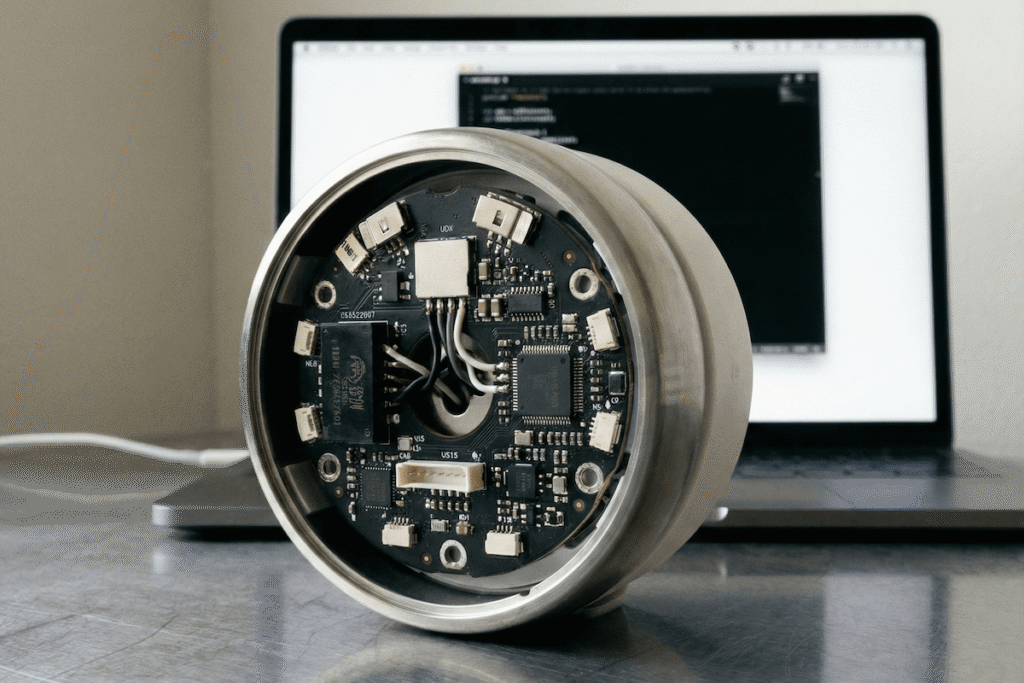
When Google announced it was shutting down the legacy servers that power the first- and second-generation Nest thermostats, my wall dial instantly lost half its personality. No more app control, no more remote tweaks, no more quietly impressive machine learning. It still kept the house warm, sure – but so does the cheapest thermostat at Home Depot.
As a CTO, I love Google Workspace. Docs, Sheets, Calendar, Meet, Chat, etc. and how they all work so well together. But on the consumer side, it’s a different story. Google has a habit of quietly killing off great products, and Nest is now one of them.
In my previous post, I mentioned how I actually resigned myself to living with the newly ‘dumb’ Nest for a while and putting the Ecobee upgrade on hold. It felt like the simplest, least dramatic path forward.
The Project That Changed Everything
Enter No Longer Evil Thermostat, a community-driven effort led by security researcher Cody Kociemba. When he learned Google planned to sunset support for older Nest models – and noticed the $15,000 “liberation bounty” from the FULU Foundation – he decided to do something about it. The project’s goal is simple in spirit but ambitious in execution: give these thermostats a second life with open-source software and a cloud that isn’t controlled by Google.
The pitch is compelling: restore full smart features to abandoned hardware through a new, community-backed cloud service and a polished web interface. Same thermostat, same on-device interface but a completely new web portal to control it. And no Google servers in the picture.
Taking the Risk
There was just one complication: flashing my thermostat carried real risk. As in, “this could become a decorative circle on the wall” risk.
So I built a Plan B.
Plan B meant reviewing every step beforehand and staging a fallback thermostat nearby – the $30 variety that looks like it belongs in a motel hallway. If things went sideways, I’d still have heat. My HVAC system wasn’t going to become a casualty of curiosity.
With that safety net in place, I dug into the documentation. The process surprised me: the instructions are clear, the steps are sequential, and the tooling is far more polished than most “I swear this works” open-source projects. You don’t need to be an embedded-systems engineer; you just need to follow directions and take your time.
And somehow… everything went smoothly.
Within about an hour, my Nest was reborn with a fresh UI, modern controls, and a cloud service that isn’t waiting for a product manager to decide its fate.
A Small Win in a Cloud-Dependent World
There’s something quietly liberating about giving a device an afterlife beyond what its manufacturer intended. Not because I’m anti-Google – I rely on it daily – but because good hardware shouldn’t be collateral damage in a corporate roadmap.
If you’ve got a Gen 1 or Gen 2 Nest gathering digital dust, the No Longer Evil Thermostat project is worth exploring. And if you’re hesitant, I get it but feel free to reach out. I’m happy to share what I learned and how I kept my HVAC intact.
The irony is hard to miss: the smartest version of my thermostat is the one that no longer depends on a company famous for shutting things down. Sometimes the best upgrades come from the people who simply refuse to let good hardware die.
👉 Missed the beginning? Start from the top: Google Pulls the Plug on Nest Gen 1 & Gen 2