Part of the Smart Home Saga – a four five-part look at my ongoing truce with Google Nest.
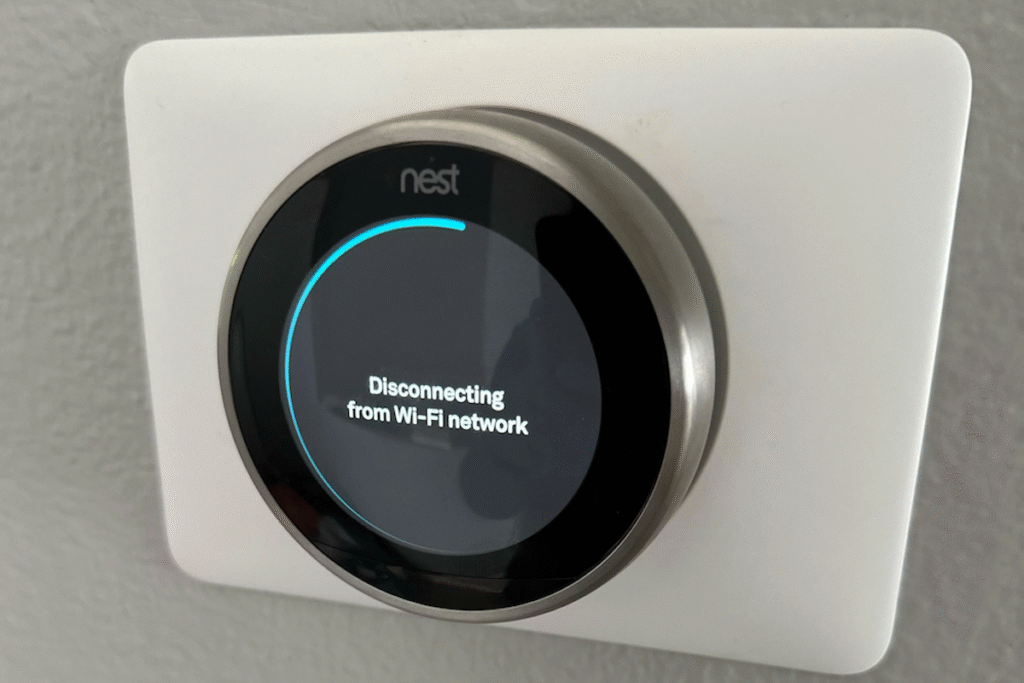
I woke up one morning to find out my perfectly functional Nest Learning Thermostat was about to lose Wi-Fi access. No more app control. No more scheduling. No more voice commands. Just a polite notice from Google that my device would soon stop being smart.
For a company that built its brand on “making things work better together,” this felt like the opposite. I wasn’t upgrading because I wanted to – I was upgrading because Google decided I should.
My Three (Terrible) Options
Once the email landed, I realized I had three equally uninspiring paths forward:
- Stay put. Keep my Nest on the wall and accept that it would soon become a glorified manual thermostat.
- Upgrade. Buy a new Nest and use the “generous” coupon Google provided – a discount that felt more symbolic than helpful.
- Abandon ship. Ditch Google entirely and try another brand like Ecobee, Honeywell, or Emerson.
None of these felt great. The first meant losing features I’d paid for. The second meant rewarding the very company forcing the change. The third meant a research project, rewiring, and possibly compatibility issues with my 1950s-era heating system.
Why It’s So Frustrating
This wasn’t about progress. It wasn’t about innovation. It was about control.
The part that stings is that nothing was wrong with my thermostat. It wasn’t broken, outdated, or unreliable. It did exactly what it was designed to do – quietly and efficiently – until Google decided it wouldn’t anymore. The functionality didn’t fade because of wear and tear; it was switched off.
That’s the maddening thing about today’s “smart” products: you don’t really own them. You own the hardware, but the brains – the software, the connectivity, the convenience – live somewhere in a corporate cloud that you have zero control over. When that company moves on, your gadget becomes collateral damage.
It’s a bit like buying a car, only to have the manufacturer announce five years later that they’re disabling the steering wheel unless you upgrade to the new model. Technically, the car still runs – you just can’t steer it anymore.
And while Google framed this as a move toward “better integration and long-term support,” it’s hard not to see the pattern. The same company that sold us on the promise of smarter homes is now teaching us that “smart” might actually mean “short-term.”
There’s also the environmental aspect. Every forced upgrade means more devices tossed in drawers, closets, and landfills. It’s the opposite of sustainable. We talk a lot about green tech, but the greener choice is usually the one we already own.
So yes it’s frustrating because it’s unnecessary. Because it wastes perfectly functional technology. And because it reminds consumers that, in the smart-home world, our devices are only as dependable as the companies behind them.
What I Decided
After a few days of research, ranting, and trying to convince myself this wasn’t a big deal (it was), I took a step back and mapped out my options.
Option 1: Do nothing. Keep the thermostat, accept that I’d lose Wi-Fi, and manually adjust the temperature like it’s 2008 again.
Option 2: Buy a new Nest. Use Google’s “upgrade coupon,” which felt like being offered 10 percent off the same problem in a different color.
Option 3: Jump ship. Look at Ecobee, Honeywell, or something else entirely.
Ultimately, I decided to pause. I wasn’t ready to hand over another $200 to the company that just rendered my old $200 device obsolete. Instead, I’d live with what I had for a while – even if that meant losing convenience. I’d use it as a kind of quiet protest and an opportunity to reassess how much “smart” I actually needed in my home.
The truth is, the Nest still worked. The only thing missing was cloud access – and maybe a bit of trust. So rather than rush into another purchase, I decided to treat this as a test: could I live without the remote control, scheduling, and AI “learning” features? Could I simplify instead of upgrading?
Spoiler: it’s surprisingly refreshing to have one less device asking for permission to work.
Next in the Series
In the next post, I’ll share the deep dive I took into smart thermostat alternatives – what I learned, what I loved, and why my old-school boiler made everything more complicated.
👉 Read previous: Google Pulls the Plug on Nest Gen 1 & Gen 2: What It Means for You (and for Google)
👉 Read next: My Hunt for a Smart Thermostat: Ecobee vs. Nest (and My Old Boiler)